. Vite Vinifera De Vino's Blog

Friday, August 31, 2007

Harvest Time

I've recently come back from another Italian tour: 12 days spent between vineyards and friends.
The excuse this time was a little project I'm working on with Roberto Cipresso (sorry, but I can't tell you anything about it, at least for the time being). My hope was to have some time on the beach and a chance for relaxation. That, of course, did not happen. What DID happen was an amazing 2500 Km tour of southern Italy.
So far, the 2007 vintage has the highest temperature average of any in recorded history, with an unusually hot winter to the point that the first pruning was delayed by as much as two months. A very hot spring and summer followed without much rain, and when rain did come, it fell in short and intense precipitations. When I landed in Rome we walked into a temperature between 33 and 40 Celsius (91 to 104 degrees Farenheit). Across the "Boot", some had already started to cut white grapes and reds to be used for the sparklers. The acidity of the fruit was rapidly declining and sugar levels were rising, to the point at which the cutting was the only logical solution.
The first leg of my trip was dedicated to owner/winemaker Bruno De Conciliis, in the beautiful Cilento national park. Thanks to the precise navigation system of my rented Mercedes (the ugliest one I've ever seen), it took me about 3 hours to reach my destination. Bruno is currently in the process of building new cellars, which means he is working in smaller, construction-addled spaces. Despite the cramped conditions, he is trying to make the best of a difficult situation, as you can see in the video. We tried some barrels of wine that will not be released, even though the wines were excellent.
Those barrels contained some experiments he's doing with Fiano, Greco di Tufo and Primitivo. His goal is to retain elegance in the wines, and control the strong fruit that came with territory in favor of the secondary flavors that are more commonly found in Campanian wines. The current vintage was early for him as well, but I truly thought I would see much heavier damage to the grapes, either cooked or with skin problems. Instead, the majority were very healthy. The only major detraction for his 2007 harvest was that he had lost about 20% of the fruit to the "Peronospora," a mold that kills the clusters. Because he didn't use any chemical treatment against it, he also told me that most winemakers who treated the plants lost around 17%, making bearable the road he pursued, and less expensive considering the money he saved.
The grapes were ready for the first passage to cut the green clusters in order to make sparkling wine. Going through the field of Aglianico (one of the five vineyards that provides the Aglianico for the Naima) one could notice the different maturations from plant to plant and row to row; some grapes were already a thick blue color while others in the same cluster were still green. Eating the grape you could feel already some nice perfumes and a good amount of sugar, with the seeds just starting to turn brown (an indication of an advanced stage of maturation). The acidity was a bit low but enough to give the grapes a sense of freshness.
The Fiano grapes were ready as well for the first passage and in spectacular condition. Amazingly, the acidity was pretty high despite the warm weather. When I left the area the thermometer was around the 98 degrees; which just goes to show you how different Italy is, climate-wise.
I spent a couple of days in Rome where the temperature was between 90 and 100, and then I went to Montalcino, where it was almost the same temperature as in Rome. I met Roberto at the Winecircus, where the facilities are almost completed, a very impressive improvement since April. They also were ready for the "Vendemmia:" the machinery were been cleaned and prepared to receive the grapes from the trucks.
Here, the temperature went from 91 to 64 overnight with some intense precipitation in the early morning. When I woke up, my window was above a bed of clouds in a scenario more proper for the fall than the end of summer. They hadn't had a drop of rain since June 12th, and for several reasons the rain gave a break - with the plants under intense stress, the much colder temperature and the water were good factors. The high humidity... not so much. At the same moment in Sicily, the temperature was 105 degrees, and in Cilento, it was around 95. On a temperature-gauged map, it would have looked like Italy was cut in half. The weirdest thing was that around the middle of the day, the temperature went back in the 90s, only to drop again at night into the high 6os.
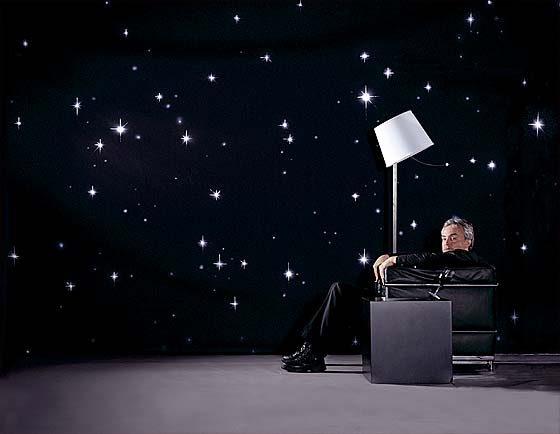
With Roberto, we walked down the La Fiorita vineyards. Here also, the grapes were healthy and in very similar condition to the De Conciliis ones: the skins were intact and the flavors were concentrated, with a good amount of sugar. During the visit, Roberto was kind enough to open a bottle of the last release of his Brunello - the 2001 Riserva, aged for 6 years before being released. The wine was very elegant with soft tannins and a strong flavors of violet and cherries. Some notes of leather were also showing; the 2001 vintage turned out so well for him that he decided to bottle just Riserva and no regular Brunello. We shared the wine and a lovely dinner with some friends at the Winestation: Giovanni Negri, owner of Serradenari winery in Piedmont, Fabio Leccisotti, without whose advice Roberto would be a lost man (and probably broke too), and Bob Guccione Jr, editor\owner of Discover Magazine. And after all that, the evening was just long enough for a bottle of Champagne Ayala in "Piazzetta" (Montalcino's downtown square) before my ugly Mercedes took me back to the Hotel dei Capitani, where I took the picture you see above. For the second day in a row I woke up looking at fog, but this time I was in it!!! I have never seen anything like that before the end of August in Italy!
Before leaving Montalcino for Umbria, I stopped by the Talenti estate where I was greeted by Riccardo, nephew of Pierluigi, the estate founder.
Young and passionate Riccardo took me for a tour of the facilities. They now work in 3 different spaces, the first of which was the stocking room, where they were bottling. It reminded me of when I was a kid and the Cantina Cooperativa di Pitigliano had bought bottling machinery - the members were invited for the inauguration. I guess at that time it was a pretty big deal to buy such an expensive machine.
He then showed me where, in the vinification quarters, they have several big stainless steel tanks, square-shaped, reminding the visitors that those tanks where conceived to maximize the space.
At the end of the tour we tasted the 2005 Rosso di Montalcino and the 2002 Brunello; the Brunello was quite good considering the year was very difficult - he corked just 2000 bottles of Brunello for that year.
When I left Montalcino, the weather was cold and rainy. Hard to believe that the very next day the temperature will rise again to over 100 degrees.
I got to Umbria in a couple of hours and Gigi welcomed me with a much needed jump in the pool. Although the sun was out, the water was freezing. Afterward, we walked the vineyards around the house, rows of Cabernet Sauvignon and Merlot. Gigi's plants are 5 years old, so they are still very young and therefore vigorous. He also uses irrigation during the hottest part of the summer, so the plants and the leaves were in perfect condition. The grapes were also in perfect conditions with very few cooked clusters. That was partially due to Gigliola's great idea to cut the leaves, so that the grapes are exposed to the morning sun, but protected from it in the afternoon.
My trip is almost over, I left Gigi an Ficulle around 12 PM to Roma; it was a very hot day the temperature rose up to 42 Celsius (107), so what was the hope of most of the "enologi" for some rain and then good weather is turning in reality; 2007 is going to be the vintage where the winemakers can make the difference with their intuitions and expertise. The cold break and the rain are signs that need to be interpret by the professionals, but looking at the grapes, I can say that they are healthy and beautiful and that is always a good sign. We'll just have to see what happens during and after the fermentations.
Buona Bevuta a Tutti

Monday, August 06, 2007

Would you trust a restaurant were the owner does not eat there or a producer that doesn't drink his own wine?

I think most of us would say no I wouldn't eat there or I wouldn't drink that; so my next question is how many bottles of Yellow Tail the founders drink?
How many times per week McDonald's CEO eats a Big Mac?
I believe their answer would show a zero or a number very close to it, so why is that millions of people around the planet still trust those companies?
Now I have a question for the editors of wine and food magazines; how come you never asked that question? Although I saw the founders of Yellow Tail being interviewed several times about their business model, and I heard them praise the exceptional quality and pureness of their products but I never heard them asked do you consume your own products? (better if a lie detector is involved)
Buona Bevuta a Tutti

Saturday, July 28, 2007

Cabernet Night

This is a true story about a typical case of, as Notorious B.I.G. used to say, "getting high on your own supply."
The excuse was a visit from Luigi on a summer Saturday night. Luigi is a jack-of-all-trades (master of many) who helps me out with various aspect of my work. He also happens to be a close friend. - Saturday was our version of boys night, so we met at my shop, where I decided to take a bottle right from my wall; the Castello dei Rampolla Vigna d'Alceo was calling me, and I most definitely answered that call. I opened the bottle at 9:00 pm, and as soon I uncorked it, a strong perfume of black cherries began to perforate all the air around the bottle. Even before I had poured it into the glass, the cherries were supported by some leather and spice; great nose very vibrant and young, even though the bottle had already reached its 10th birthday.
1997 was a hot year, but in Tuscany it was close to perfect, lest we are reminded of the hype behind the release of the 97 Brunello. This Cabernet base "Super Tuscan" shows a strong bouquet and a heavy weight connected to the climate conditions but still maintaining a great tannic structure and enough acidity to make it very drinkable. Luigi offered a perfect comparison: "it's like an agile fat man".
Castello dei Rampolla is a winery situated in Panzano, in Chianti, and has been part of the Di Napoli Rampolla family since 1739. But, it wasn't until the early 70's that they started to vinify and bottle their own wines.
The winery is organic and biodynamic and the harvest is done by hand; today Maurizia and her brother and Luca Di Napoli Rampolla are in charge of the operations.
One hour in, the tannins became firmer, the dark cherries became less sweet and hints of rosemary and white pepper start to show - the finish was getting longer and longer.
The wine was so good that Luigi and I decided to open another bottle. But we wanted something different. Luigi wasn't sure that we could match the Vigna d'Alceo... but the Ridge Montebello Cabernet 1977 did the trick.
If I had to compare the two, I would say that the Ridge was more elegant and traditional then the Rampolla, probably because 1997 was a very hot year in Italy and the wines tended to be more fruit forward. Both had the same dark cherries and leather as flavor base, but the Ridge was a bit more austere and linear.
Amazingly, after 2 bottles for as many people, we were still making sense and able to appreciate the wines until the last sip, which - as usual - was the best one.
Buona Bevuta a Tutti

Wednesday, July 18, 2007

Most embarrassing wine moments


As it goes in every profession, in the wine business, we have our fair share of embarrassing moments.
Personally, I can remember my first time with the Rabbit, a "heavy duty machinery" corkscrew that I notice sitting in a lot of womens' kitchens; I was at a friend's house and obviously, I brought some wine. When I asked for a corkscrew, she pointed at a stainless steel case on the counter, and there it was - the Rabbit (my guess is that it's called as such for the look of it's handles, which comprise a crude representation of rabbit's ears).
So, I put it on top of the bottle and with a firm movement I went back and forth like I was playing a slot machine.
The cork was magically gone - and not just from the neck of the bottle, but also from the opener. I looked on the floor and on the counter, under everything in the kitchen... there was no trace of it. This, of course, was because I had pushed the cork into the bottle instead of pulling it out. I discovered the embarrassing misfortune when I tried to pour with little to no success, inducing my friend to raucous laughter. I remembered about that episode last night when my friend Piers, in an attempt to re-cork a magnum, used a regular bottle cork, and watched it easily drop into the bottle.
Tastings are also places prone to embarrassments. I remember a guy that said something really funny while one of us had just sipped from his glass, and watching the unfortunate man's eyes open wide in the attempt to not laugh, then seeing the red wine coming out of his nose. A particularly unpleasant but highly comical scenario. Still in the tasting department, I have to mention another slip-up; me mistaking the Sella & Mosca Tanca Farra, a blend of Cabernet Sauvignon and Cannonau from Sardegna, for an American Pinot Noir during a dinner with Dino Tantawi of Vignaioli Selection, and Chris Cannon of L'Impero. Oops.
There are also tasting goofs that occur more frequently, and are of a more pedestrian nature... there's just nothing you can do to prevent them. For instance - numerous times I've swallowed into the wrong canal and started to cough like there was no tomorrow, while trying to give my feedback under the embarrassed and often concerned look of my interlocutor. Wine and windpipe do not mix.
I think I can go on for a while in this department being that I haven't mentioned any embarrassing moments related to excessive consumption, but I would like to hear your experiences, as well.
Buona Bevuta a Tutti

Friday, July 13, 2007

We are reaching the bottom!!!

In today's news from Italy, the Guardia di Finanza, one of the Italian Police forces, seized 24,000 Hectoliters (572,000 gallons ca) of white table wine that was supposed to be sold fraudulently as Prosecco and Pinot Grigio IGT delle Venezie!!!
7 people have been indicted for making simple white table wine and bottling it as an IGT (indicazione geografica tipica) or as the refreshing sparkling wine from the Veneto Region. The thought... it's just unbelievable. It's like doing a cheaper version of something that is already very inexpensive.
The grapes were coming from wineries that were struggling (from Piedmont, Veneto, Tuscany and Friuli Venezia Giulia); all of a sudden, they were turning in high profits, and with a complicated system of fake invoices and other documents, they were able to pass off the lowest grade of Italian wine for a little better than the lowest grade of Italian wine!
Yes, that's right - we're not talking of Sassicaia or vintage Bordeaux being counterfeited and passed off yielding high profit for the forgers. We're talking about people who were cheating on wines that are sold for only a few Euros at the wineries.
But! The amount of wine seized by the police was enough for 3,200,000 bottles. even if they could have made a profit margin of 1 euro per bottle, it's still a very good return for one year. But I have a feeling that the margins are much higher than that; I know for a fact that you can buy several thousand gallons of wine from Chile or Argentina and have it shipped to Italy for less then 50 Euro cents per liter. Then you'd be missing only the cork (a plastic cork can cost as low as 20 Euro cents), the label and the bottle (which can add other 15 cents for a total of 0.85 Euros!). Now if the same wine is sold as loose table wine, it has a value of about 1 to 1.5 Euros per bottle, depending on the quality. But if the same wine is marked Pinot Grigio IGT delle Venezie or Prosecco, it can be sold for 2 to 7 Euros, depending on quality. - In the end, that fraud could have brought in over four million Euros in profit. Absolutely unbelievable.
This one example (one very big example) of the truth in the phrase, "you get what you pay for," considering that those table wines are the bottles that end up on NYC store shelves for less than 6 dollars. Buyer beware!
Buona Bevuta a Tutti

Saturday, June 30, 2007

Fragile World


I spend a good amount of time in front of my computer, and a fair part of that time surfing the net, looking at fellow bloggers' sites.
I must say, Dr. Vino is a refreshing font of information, with his articles that are very wide-ranging, concise and most of the time (even when they're kind of twisted) on point.
On July the 2nd he posted part of an interview with Robert Parker for the Naples (FL) Daily News;

"For most people, I think, giving 100 points is almost setting up a situation for the people who are reading it … to be disappointed because you have somebody who’s well-known and has credibility saying it’s perfection in wine. And there’s always the issue: Is there perfection in wine?

I’ve always tried to explain it saying that, you know, I’m a very passionate person and an emotional person. I really think probably the only difference between a 96-, 97-, 98-, 99-, and 100-point wine is really the emotion of the moment."

Now the reality is that the difference between a 96 and 100 could mean a significant change in sales, meaning that essentially, the wine world is so fragile that the emotions of an individual can change the fate of a winery.
Better late than never, I say; finally, we hear something objective from the mouth of a wine critic. 100 points does NOT mean perfection, 100 means that a particular wine in a particular moment gave a particular person a strong emotion.
Now the same wine drunk on another occasion might have garnered a lower score. Ergo, a 100-point wine means that the producer of that wine is probably very lucky that his/her bottle was drunk or tasted at the right time within the right frame of mind.
Isn't this system a little too unreliable? Isn't it absurd that what one person has to say about a bottle of wine can mean millions of dollars in sales? Are consumers so used to having somebody telling them what to like and what not to like that their own brains and taste buds are now useless to their natural purposes?
A little while ago, I posted an article on ratings in which I posited that is not possible to rate a wine with a number chart, because an emotion cannot be quantified and because wine is not an exact science.

Wednesday, June 27, 2007

The End Day XII

Once again "Il Bel Paese" gave us another gorgeous day - bright sun and fresh air. After breakfast, we met with Luciano and head towards Il Carnasciale.
The story of this winery started in the mid 1980s, thanks to Bettina Schnabel Rogosky and her husband Wolf. It is the story of the Caberlot, which is not a blend, but a specific grape. The grape was first discovered in the 60's when agronomist Remigio Bordini came across a unique clone growing in Veneto.
That clone appeared to be a genetic modification of Cabernet Sauvignon, but it was also showing the characteristics of Merlot. That clone was "adopted" by Remigio, and was grown and cultivated under his care for over 20 years before finding its home in the Chianti region, more specifically in Bucine, near the Fattoria di Petrolo under the shadow of the Galatrona tower.
After a good 15 minutes on dirt roads we passed by the Petrolo estate, and shortly after we saw the "Podere" entrance. Peter Shilling, the winemaker, welcomed us with his marked German accent, and to the side, there it was, shining under the sunlight; the Caberlot field (picture on top), 10.000 plants on one hectare of land for a production of less than 1500 magnums.
The house/winery is very small up to the point that Peter was joking about having barriques stored under his bed. In reality you can spot the barrels almost everywhere around the cellars, as you can see from picture.
To the right is a photo of the main floor, where the wine is fermented in stainless steel tanks, and below that floor is the barrique room, although the barriques are placed wherever there is space for them.
The racking system is made so that the barrels can be turned for the "batonage," and to maximize space (they can hold three rows of barrels). While we were tasting different vintages from the barrels, Peter told us that the estate uses the help of Vittorio Fiore as consultant, that their yields are ridiculously low and that they had to decline a Caberlot request from the former Italian Prime Minister Berlusconi the year before. The plants were planted in 1985, after a long bureaucratic journey, so for good luck, they buried a bottle of 1985 Sassicaia in the field.
The winery also produces the "Carnasciale," a younger brother of the Caberlot made from younger vines of Caberlot. It was bottled for the first time in the year 2000, and we had a bottle of the 2004 after the cellar tour.
One thing I can say about their wines - I've never tried a single-varietal wine that tasted like a Bordeaux before these. They are amazing products with an amazing history.
It was time to leave this little piece of paradise to go visit Theophil, probably the smallest winery in the world.
Peter helps Theophil to produce his wine, a blend of Sangiovese and a little bit of Merlot. Theophil Butz is a Swiss graphic designer (or "inspirator," as he defines himself on his business cards). He bought his house with few rows of vines, and restored it. The cellars are next to the living room, and everything is on the same level. He has 1 small stainless steel vat and 2 barriques for a total production of 300 magnums, which are store behind the barrels in the wall.
Theo opened a bottle, and we tasted it. The wine was very harmonious and elegant, filled with fresh cherries and leather flavors. He opened a 2004 ,which is both the first bottling and the current vintage - I must say that we enjoyed it a lot, and I'm currently working on having the wine imported.
In the picture on the left, you can see Theo in the light blue shirt, Peter in the middle, and Luciano "I' Frasca" on the right, talking (most likely) about politics after we finished the wine.
Sadly it was time to leave, and on the way back to Rome, Piers and I exchanged some thoughts on the trip. We both concurred on the exceptional quality of the wines we'd tasted during our journey, particularly how good the first releases had been; the Castello di Vicarello, Tenuta Vitalonga and Theophil wineries will have a very bright and successful future.
I would like to end this diary thanking everybody we met for the exquisite hospitality they provided, in particular: Gigi Maravalle and Il Frasca for giving us a place to stay; Roberto Cipresso and Billy for the wonderful time in Montalcino, as well as Fabio Giannotti of La Fornace, and Caroline and Jan of Pian dell'Orino; Peter and Theo for showing us some wines that are impossible to find and making them available for my store; Marina for the great meal at il Boccon Divino; and il Frasca once again for the amazing food he prepared for us.
Grazie a Tutti
THE END!